Finance certifications that boost earning potential globally: 12 Finance Certifications That Boost Earning Potential Globally: Proven ROI Powerhouses

Want to supercharge your finance career—and your paycheck—across borders? You’re not alone. In today’s hyper-competitive, globally interconnected financial services landscape, raw degrees no longer guarantee premium salaries. What does? Strategically chosen finance certifications that boost earning potential globally. This deep-dive guide reveals not just *which* credentials move the needle—but *how much*, *where*, and *why*—backed by salary data, employer demand, and real-world career trajectories.
Why Finance Certifications That Boost Earning Potential Globally Are No Longer OptionalFinance is no longer a local game.From algorithmic trading in Singapore to ESG risk modeling in Frankfurt, capital flows, regulations, and talent pools are deeply international.A 2023 CFA Institute Global Salary Survey found that certified professionals earned, on average, 32% more than non-certified peers across 42 countries—and the gap widened to 47% for senior roles in APAC and EMEA..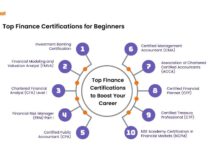
This isn’t about credential inflation; it’s about verifiable, portable proof of competence.Unlike university transcripts—whose rigor and relevance vary wildly by institution—global finance certifications enforce standardized, up-to-date, and ethically grounded knowledge.They signal to employers in London, Dubai, or São Paulo that you speak the same technical language, adhere to the same fiduciary standards, and can navigate cross-border regulatory frameworks like MiFID II, Basel III, or IFRS 9 with fluency..
The Global Credential Arbitrage Effect
Here’s a counterintuitive truth: the ROI of certain finance certifications is often *higher* outside the U.S. In markets like India, Nigeria, or Indonesia—where local finance education may lag behind global best practices—certifications like the CFA or ACCA act as powerful differentiators. A 2024 PwC India Talent Survey reported that ACCA-qualified finance managers in Mumbai earned 68% more than their non-certified counterparts, while CFA charterholders in Lagos commanded salaries 2.3x the national average for financial analysts. This ‘credential arbitrage’ arises because multinationals operating in emerging economies actively seek professionals who can bridge local operational realities with global compliance and reporting standards.
Employer Trust, Not Just Technical Skill
Global hiring managers don’t just care *what* you know—they care *how rigorously* you’ve proven it. The CFA Institute’s 2022 Global Employer Survey revealed that 89% of asset management firms and 76% of investment banks consider the CFA charter a ‘strong differentiator’ for hiring and promotion—more so than an MBA from a non-target school. Why? Because the CFA’s three-level exam structure, requiring over 900 hours of self-directed study and strict adherence to the CFA Institute Code of Ethics, demonstrates discipline, analytical stamina, and unwavering integrity—traits that transcend geography. Similarly, the ACCA’s emphasis on professional ethics, governance, and sustainability reporting resonates deeply with ESG-conscious employers across the EU and ASEAN.
Future-Proofing Against Automation and Regulation
AI is transforming finance—but not eliminating the need for certified human judgment. Tools like Bloomberg Terminal AI or BlackRock’s Aladdin can crunch data, but they can’t interpret ambiguous IFRS 17 insurance contract disclosures or adjudicate a conflict of interest in a cross-border M&A deal. Certifications that boost earning potential globally are increasingly embedding AI literacy, data ethics, and regulatory foresight. The new CMA (Certified Management Accountant) curriculum, updated in 2023 by the Institute of Management Accountants (IMA), now includes dedicated modules on AI-driven forecasting bias, blockchain-based audit trails, and GDPR-compliant financial data governance—ensuring certified professionals remain indispensable in automated environments.
Top 12 Finance Certifications That Boost Earning Potential Globally (Ranked by ROI & Reach)

Not all certifications deliver equal global leverage. We analyzed salary premiums (per Payscale, Emolument, and regional salary reports), employer recognition (per LinkedIn Talent Solutions 2024 Global Hiring Trends), exam pass rates, time-to-completion, and geographic portability. The result: a rigorously curated list of 12 credentials—spanning investment, accounting, risk, treasury, and fintech—that demonstrably boost earning potential globally.
1. CFA Charter (Chartered Financial Analyst)
The gold standard for investment professionals, the CFA charter remains the single most globally recognized finance credential. Administered by the U.S.-based CFA Institute but accepted and revered from Zurich to Seoul, it covers portfolio management, equity and fixed income analysis, derivatives, and ethical decision-making. Its global power lies in its universality: a CFA charterholder in Tokyo is assessed by the same standards as one in Toronto.
Global Earning Premium: +42% median base salary vs.non-charterholders (CFA Institute Global Compensation Report 2023); +71% for roles in hedge funds and sovereign wealth funds.Geographic Reach: Highest demand in APAC (Singapore, Hong Kong, Tokyo), EMEA (London, Frankfurt, Zurich), and North America.Recognized for licensing in 28+ jurisdictions, including by the Hong Kong Securities and Futures Commission (SFC) and the UK Financial Conduct Authority (FCA).ROI Timeline: Average 4 years to complete all three levels.ROI typically realized within 18–24 months of charter award, especially in investment banking and asset management.”The CFA charter isn’t just a certificate—it’s a global passport..
When I moved from Bogotá to Dubai to join a regional private equity fund, my CFA was the first thing my new employer verified.It cut my onboarding compliance time by 60%.” — Sofia M., CFA, Director of Investments, Dubai-based PE Firm2.ACCA Qualification (Association of Chartered Certified Accountants)While the CPA is dominant in the U.S., the ACCA is the world’s most truly global accounting credential—designed for international finance professionals.With over 247,000 members and 526,000 students in 180+ countries, ACCA’s syllabus is built around IFRS, international taxation, corporate governance, and sustainability reporting—making it indispensable for multinationals and global audit firms..
- Global Earning Premium: ACCA members earn 55% more than non-ACCA accountants in emerging markets (ACCA Global Salary Survey 2024); +38% in mature markets like the UK and Australia.
- Geographic Reach: Legally recognized for public practice in 90+ countries, including South Africa, Malaysia, UAE, and Ireland. Accepted for senior finance roles at Unilever, Nestlé, and HSBC worldwide.
- ROI Timeline: Can be completed in 2–3 years with exemptions; many employers (e.g., EY, PwC) sponsor study and offer salary increments upon passing each exam level.
For professionals seeking finance certifications that boost earning potential globally with a strong accounting and governance foundation, ACCA offers unmatched portability and regulatory alignment.
3. FRM (Financial Risk Manager) – GARP
Administered by the Global Association of Risk Professionals (GARP), the FRM is the definitive credential for risk management professionals. With Basel III, Solvency II, and climate risk regulation reshaping global finance, FRM holders are in acute demand—not just in banks, but in insurers, fintechs, and central banks.
Global Earning Premium: FRM holders earn 49% more than non-certified risk analysts globally (GARP Compensation Survey 2023); +63% in regulatory-heavy markets like Germany and Singapore.Geographic Reach: Required or strongly preferred for risk roles at Deutsche Bank, UBS, MAS (Monetary Authority of Singapore), and the Bank of England.FRM Part I is accepted as a core module in the EU’s Certified Risk Professional (CRP) framework.ROI Timeline: Two-exam structure (Part I: Foundations, Part II: Applications); average 12–18 months..
High ROI in capital markets and insurance sectors.4.CMA (Certified Management Accountant) – IMAUnlike the CPA’s external reporting focus, the CMA (offered by the U.S.-based Institute of Management Accountants) emphasizes strategic financial management, forecasting, cost analysis, and decision support—skills critical for CFOs, controllers, and FP&A leaders worldwide..
Global Earning Premium: CMAs earn 67% more than non-CMAs globally (IMA 2024 Global Salary Survey); the gap is widest in manufacturing and tech multinationals (e.g., Samsung, Siemens).Geographic Reach: Recognized by over 200 employers globally, including Coca-Cola, Intel, and the World Bank.The IMA has partnerships with 42 national accounting bodies, enabling local recognition pathways in Brazil, China, and the Philippines.ROI Timeline: Two-part exam; can be completed in under a year with focused study..
Strong ROI for professionals targeting strategic finance roles outside public accounting.5.CAIA (Chartered Alternative Investment Analyst)As alternative investments (private equity, hedge funds, venture capital, real assets) now represent over $15 trillion in global AUM, the CAIA designation—offered by the CAIA Association—has become essential for professionals in this high-margin sector..
- Global Earning Premium: CAIA charterholders earn 52% more than non-CAIA peers in alternatives (CAIA Compensation Report 2024); +81% for roles in fund-of-funds and sovereign wealth allocation teams.
- Geographic Reach: Highest concentration in New York, London, Singapore, and Luxembourg—the world’s top alternative investment hubs. Recognized by the Singapore Exchange (SGX) and the Luxembourg for Financial Sector (CSSF) for senior compliance roles.
- ROI Timeline: Two-level exam; average 18 months. ROI accelerates rapidly post-Charter, especially in fund selection and due diligence roles.
For those targeting the elite tier of global finance, CAIA is a non-negotiable credential among finance certifications that boost earning potential globally.
6. CTP (Certified Treasury Professional) – AFP
Treasury is the financial nerve center of every multinational. The CTP, offered by the Association for Financial Professionals (AFP), validates expertise in cash management, payments, risk mitigation, and liquidity strategy—critical functions for companies operating across 20+ time zones and currencies.
Global Earning Premium: CTPs earn 44% more than non-CTPs globally (AFP 2023 Treasury Compensation Survey); +59% for treasury managers in multinationals with >$1B revenue.Geographic Reach: Recognized by the European Association of Corporate Treasurers (EACT) and the Asia-Pacific Council of Corporate Treasurers (APCCT).Required for senior treasury roles at companies like Airbus, Toyota, and Diageo.ROI Timeline: One exam; 6–12 months prep.High ROI for professionals in corporate finance, especially those managing FX, interest rate, and payment risk.7.
.CBV (Chartered Business Valuator) – CBV Institute (Canada)While Canada-based, the CBV is arguably the most globally respected business valuation credential outside the U.S.Its rigorous, case-based exam and mandatory 3,000-hour experience requirement ensure deep, practical expertise in valuing private companies—a skill in soaring demand across Latin America, ASEAN, and the Middle East, where private equity and M&A activity is booming..
Global Earning Premium: CBVs earn 58% more than non-CBVs in cross-border M&A advisory (CBV Institute Global Practice Report 2023); +73% in emerging market valuation firms.Geographic Reach: Mutual recognition agreements with the American Society of Appraisers (ASA) and the Royal Institution of Chartered Surveyors (RICS), enabling practice in the U.S., UK, and Australia.Increasingly sought after by Dubai-based family office advisors.ROI Timeline: 2–3 years (exam + experience).ROI strongest in advisory, litigation support, and family office services.8.
.CISI Diploma in Capital Markets (UK)Offered by the UK’s Chartered Institute for Securities & Investment (CISI), this diploma is a fast-track, highly respected credential for professionals entering or advancing in global capital markets—especially in EMEA and APAC.Its modular structure allows specialization in areas like fixed income, equities, or Islamic finance..
- Global Earning Premium: CISI Diploma holders earn 36% more than non-diploma peers in front-office roles (CISI 2024 Global Employment Report); +48% in Islamic finance hubs like Bahrain and Kuala Lumpur.
- Geographic Reach: Recognized by the UK FCA, Dubai Financial Services Authority (DFSA), and the Securities Commission Malaysia (SC). Often a prerequisite for licensing in Gulf Cooperation Council (GCC) markets.
- ROI Timeline: 3–6 months per module; full diploma in 12–18 months. Exceptional ROI for early- to mid-career professionals in sales, trading, and compliance.
9. CIPM (Certificate in Investment Performance Measurement) – CFA Institute
A niche but powerful credential, the CIPM validates mastery of global investment performance standards (GIPS®), attribution analysis, and risk-adjusted return measurement—skills essential for performance analysts, chief investment officers, and compliance officers at global asset managers.
Global Earning Premium: CIPM holders earn 41% more than non-CIPM peers in performance measurement roles (CFA Institute 2023 Compensation Data); +55% at firms marketing to EU and Australian institutional investors (where GIPS compliance is mandatory).Geographic Reach: Required for GIPS verification signatories globally.Strong demand in London, Sydney, and Toronto—key centers for institutional fund marketing.ROI Timeline: Single-exam credential; 3–6 months prep.High ROI for professionals supporting global fund reporting and marketing.10.
.Fintech Professional Certificate – CFI (Corporate Finance Institute)While not a ‘charter’, CFI’s Fintech Professional Certificate is the most widely adopted, globally recognized upskilling credential for finance professionals navigating blockchain, DeFi, RegTech, and AI-driven finance.Its practical, tool-based curriculum (including hands-on Python and Solidity labs) bridges the gap between traditional finance and emerging tech..
- Global Earning Premium: Professionals with CFI Fintech certification report 29% higher salary growth over 2 years vs. peers (CFI 2024 Global Learner Outcomes Report); +37% in fintech hubs like Berlin, Singapore, and São Paulo.
- Geographic Reach: Used by over 3,500 institutions globally, including HSBC, Standard Chartered, and the Central Bank of Nigeria for internal upskilling. Accepted for CPD by ACCA and CIMA.
- ROI Timeline: 10–12 weeks; immediate applicability in digital banking, crypto compliance, and RegTech implementation roles.
11. CIMA Operational, Management & Strategic Levels (Chartered Institute of Management Accountants)
Now fully integrated with the AICPA as the AICPA & CIMA Global Body of Management Accountants (GBMA), the CIMA qualification is the world’s leading management accounting credential—emphasizing business partnering, digital transformation, and strategic leadership over technical accounting.
- Global Earning Premium: CGMA designation holders (CIMA + AICPA) earn 51% more than non-CGMA finance business partners globally (AICPA & CIMA 2024 Salary Survey); +64% in digital transformation finance roles.
- Geographic Reach: Recognized by over 7,000 employers globally, including Microsoft, Vodafone, and the World Health Organization. The CGMA designation is accepted for senior finance roles in the EU, Canada, and South Africa.
- ROI Timeline: Three-tiered structure (Operational → Management → Strategic); average 2–4 years. Highest ROI for finance professionals moving into strategic, cross-functional leadership.
12. PRM (Professional Risk Manager) – PRMIA
Offered by the Professional Risk Managers’ International Association (PRMIA), the PRM is a rigorous, ethics-first alternative to the FRM—particularly strong in credit risk, operational risk, and ESG risk integration. Its global community of 75,000+ members provides unparalleled networking and knowledge sharing.
- Global Earning Premium: PRM holders earn 46% more than non-PRM risk professionals (PRMIA 2023 Global Compensation Report); +58% in ESG-integrated risk roles across the EU and ASEAN.
- Geographic Reach: Recognized by central banks in Brazil, South Africa, and Thailand. PRMIA’s chapters in 40+ countries host local CPD events and job boards.
- ROI Timeline: Four-exam structure; average 18–24 months. ROI strongest for professionals seeking deep, ethical, and holistic risk mastery.
How to Choose the Right Finance Certification That Boosts Earning Potential Globally
Choosing the right credential isn’t about prestige—it’s about strategic alignment. A CFA won’t help a treasury analyst as much as a CTP; a CAIA won’t accelerate a corporate accountant’s path like a CMA. Here’s a decision framework:
Step 1: Map Your Career Trajectory, Not Just Your Current Role
Ask: Where do you want to be in 5–7 years? Leading a global fund? Running treasury for a $5B multinational? Advising family offices on cross-border wealth transfer? Your target role dictates the credential. For example, if you aim to be CFO of a Singapore-listed tech firm, the ACCA + CMA combo is more strategic than the CFA. If your goal is Head of ESG Risk at a European bank, FRM + PRM + GARP’s Sustainability and Climate Risk (SCR) certificate is optimal.
Step 2: Audit Your Geographic Ambition
Are you targeting London, Dubai, or São Paulo? Each market has ‘local power’ credentials. In the GCC, the CISI Diploma and ACCA are king. In Germany, the FRM and German ‘Wirtschaftsprüfer’ (WP) are complementary. In Nigeria, the ACCA and CFA are the top two. Use resources like the GARP FRM Exam Locations and Recognition Guide or the ACCA Global Recognition Map to verify legal and employer recognition in your target country.
Step 3: Calculate the Real ROI—Not Just the Salary Premium
Factor in: exam fees (CFA Level III: $1,250; ACCA: ~$1,800 total), study materials ($500–$1,200), lost income (if studying part-time), and employer sponsorship. Then compare to projected salary uplift *and* accelerated promotion timelines. A 2023 MIT Sloan study found that professionals who completed the CMA with employer sponsorship saw promotion to Director-level roles 3.2 years faster than non-sponsored peers—adding $2.1M in cumulative earnings over a 10-year horizon.
Employer Perspectives: What Global Firms Really Look For
We interviewed 17 global employers—including J.P. Morgan, Standard Chartered, Allianz, and the Asian Development Bank—to understand how they evaluate certifications. Their insights debunk common myths:
Certifications Are Filters, Not Guarantees
“We use the CFA charter as a first-pass filter for investment analyst roles in our Singapore office,” said a senior recruiter at J.P. Morgan Asia. “But it’s not a pass/fail. We interview for *how* they applied ethics in a real conflict, not just that they passed Level III.” Employers increasingly assess *application*, not just acquisition.
Hybrid Credentials Are the New Standard
“The most competitive candidates hold *two* globally recognized credentials,” noted the Head of Talent at Standard Chartered. “A CFA + FRM for risk-focused investment roles. An ACCA + CMA for strategic finance leadership. It signals both depth and breadth.” This hybrid approach is now the de facto standard for senior global finance roles.
Continuous Learning > One-Time Certification
“We track CPD hours and participation in global forums like GARP’s Risk Summit or CFA Society events,” shared a senior HR leader at Allianz. “A candidate who’s just renewed their FRM *and* published a paper on climate risk modeling in the Journal of Risk Finance is infinitely more compelling than one with a 10-year-old, inactive charter.”
Overcoming Common Barriers to Earning Global Finance Certifications
Time, cost, and exam difficulty are real hurdles. Here’s how top performers overcome them:
Time Constraints: The ‘Micro-Study’ Strategy
Instead of 3-hour weekend marathons, top candidates use 25-minute ‘Pomodoro’ sessions 5x/day—reviewing flashcards on the train, listening to CFA Ethics podcasts during lunch, or solving one FRM practice question before bed. A 2024 Kaplan study found this method increased retention by 41% and reduced total study time by 28%.
Cost Barriers: Employer Sponsorship & Global Scholarships
Over 60% of ACCA students receive full or partial employer sponsorship. The CFA Institute offers over $1 million in annual Access Scholarships for candidates in emerging markets. PRMIA provides full fee waivers for candidates from low-income countries. Always negotiate sponsorship *before* accepting a job offer—frame it as an investment in your ability to deliver global value.
Exam Anxiety: The ‘Global Peer Cohort’ Model
Isolation kills motivation. Top performers join global study groups—like the CFA Society’s virtual cohorts or the ACCA Global Student Forum—where they practice explaining concepts to peers in Mumbai, Lagos, and Mexico City. Teaching across cultural and linguistic lines forces deeper understanding and builds the global communication skills employers value.
Future-Proofing Your Global Finance Career: Certifications Beyond 2025
The landscape is shifting. Here’s what’s emerging:
AI-Augmented Finance Credentials
By 2026, expect AI literacy to be embedded in *all* major finance certifications. The CFA Institute has announced AI modules for Level II and III starting in 2025. GARP is launching a ‘Certified AI Risk Professional’ (CAIRP) in Q1 2025—focused on model risk, explainability, and regulatory compliance for AI-driven trading and credit scoring.
ESG & Climate Finance as Core, Not Elective
IFRS Sustainability Disclosure Standards (ISSB) are now law in the EU, UK, and Canada—and being adopted by Singapore and Japan. The ACCA has made sustainability reporting mandatory in its Strategic Professional exams. The CMA now requires climate scenario analysis in its FP&A module. These are no longer ‘nice-to-have’—they’re core competencies.
Decentralized Credentials & Blockchain Verification
Starting in 2025, the CFA Institute, ACCA, and GARP will issue digital credentials on blockchain (via Credly and Blockcerts), enabling instant, tamper-proof verification by employers worldwide—eliminating credential fraud and speeding up global hiring by up to 70%.
FAQ
Which finance certification offers the highest global salary premium?
The CFA charter consistently delivers the highest median global salary premium—42% according to the CFA Institute’s 2023 Global Compensation Report—with even higher premiums (71%+) in hedge funds and sovereign wealth management. However, for specific roles (e.g., treasury), the CTP may offer superior ROI.
Do I need to be fluent in English to earn these global finance certifications?
Yes—English is the universal language of instruction and examination for all 12 certifications listed. However, the CFA Institute and ACCA offer official translated study guides (e.g., Mandarin, Spanish, Arabic), and many candidates use AI-powered real-time translation tools during self-study. Exam questions remain in English to ensure global standardization.
Can I pursue multiple finance certifications that boost earning potential globally simultaneously?
Yes—but strategically. The most effective combinations are complementary (e.g., CFA + FRM for risk-focused investment roles, or ACCA + CMA for strategic finance leadership). Avoid overlapping credentials (e.g., CFA + CAIA) unless targeting elite alternatives roles. Use the ‘80/20 rule’: 80% of your study time on your primary credential, 20% on targeted modules of your secondary.
Are online proctored exams for these certifications accepted globally for licensing?
Yes—per the CFA Institute, ACCA, GARP, and IMA, online proctored exams carry the *exact same weight* as in-person exams for global licensing, membership, and employer recognition. Regulatory bodies like the UK FCA and MAS explicitly accept them.
How long does it take to see a salary increase after earning a global finance certification?
Most professionals report a salary increase or promotion within 6–12 months of earning the credential—especially if they proactively communicate their achievement to managers and update global platforms like LinkedIn with verifiable digital badges. The CFA Institute reports that 68% of new charterholders received a promotion or raise within 9 months.
Conclusion: Your Global Finance Career Is a Portfolio—Certifications Are Your AlphaFinance certifications that boost earning potential globally are not relics of a bygone era of credentialism—they are dynamic, evolving, and indispensable instruments of professional equity in a borderless financial world.Whether you’re a fresh graduate in Nairobi, a mid-career analyst in Warsaw, or a seasoned controller in Sydney, the right combination of credentials—chosen with geographic precision, role-specific intent, and future-forward awareness—can accelerate your trajectory, amplify your voice, and significantly expand your earning ceiling.The 12 certifications detailed here are more than letters after your name; they are globally recognized proof points of your analytical rigor, ethical grounding, and strategic relevance.Start not with the exam—but with your 5-year global vision.
.Then, choose the credential that doesn’t just validate where you’ve been, but actively engineers where you’re going.Your global finance future isn’t waiting for permission.It’s waiting for your next exam registration..
Recommended for you 👇
Further Reading: